The Federal Plastics Registry (FPR) requires businesses to classify plastic products and packaging into prescribed reporting categories. That classification exercise is not merely administrative. In some cases, the category selected may materially affect the reporting obligations that follow.
One practical example is the distinction between plastic packaging and food service ware.
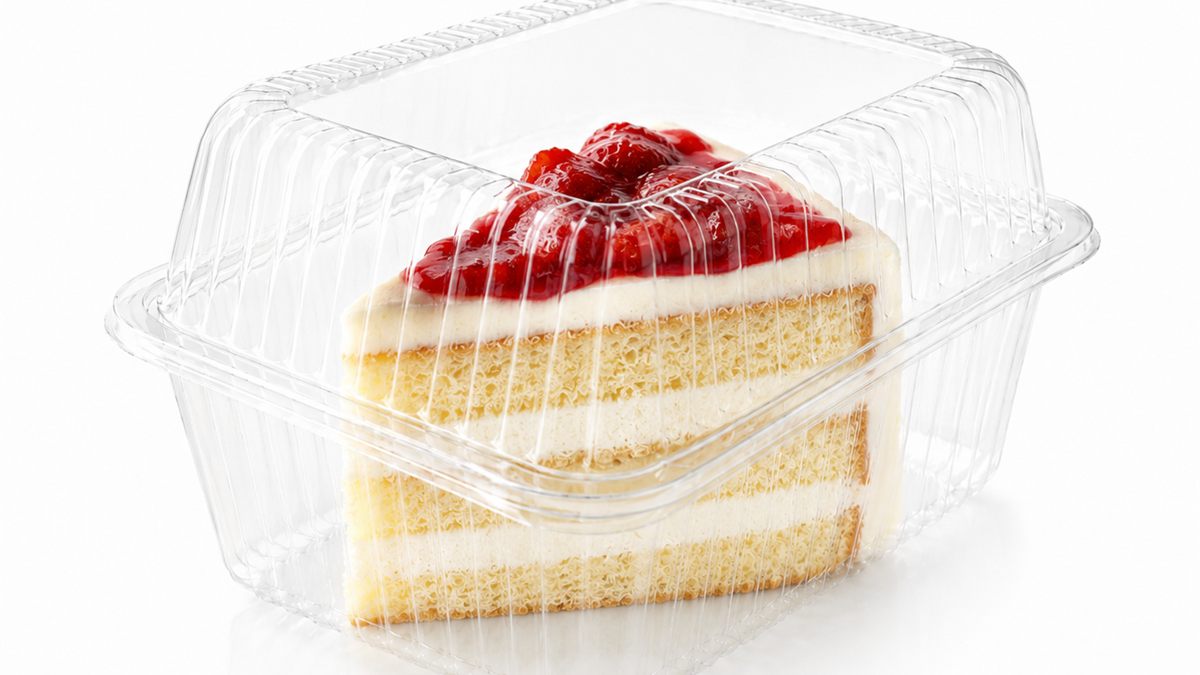
For grocers, bakeries, prepared food businesses and other food retailers, the distinction can be easy to overlook. A plastic clamshell used to sell cookies, cakes, sandwiches, salads or other prepared foods may appear, at first glance, to be packaging. It contains the food, protects it, and is provided to the customer at the point of sale.
However, under the FPR guidance, that may not be the correct classification.
Packaging and food service ware are not interchangeable categories
The FPR guidance points to a more specific treatment for certain containers used in food service contexts. Plastic clamshells used by grocers, bakeries or prepared food businesses are generally treated as single-use or disposable products, within the food service ware sub-category.
That distinction matters.
Packaging has a particular reporting structure under the FPR. Depending on the business and its role in the supply chain, packaging may need to be assessed as unfilled packaging, filled packaging, or both.
For example, a business that manufactures or imports empty plastic packaging may have one reporting analysis. A business that fills plastic packaging with a product and places it on the Canadian market may have another.
That filled and unfilled distinction is central to the packaging category.
It does not apply in the same way to food service ware.
The practical issue for grocers, bakeries and prepared food businesses
Consider a bakery that purchases generic plastic clamshells from a Canadian supplier. The bakery uses those clamshells to sell cakes, cookies or pastries to customers.
It would be understandable for the bakery to assume that, because it places food into the clamshell, it is dealing with filled packaging.
But that assumption may be wrong.
If the clamshell is properly classified as food service ware, the bakery does not necessarily have a filled packaging reporting obligation simply because it placed food inside the container. The relevant question is not only whether the item was filled. The first question is whether the item is packaging at all for FPR purposes.
Where the item is food service ware, the analysis shifts.
The question becomes: who is the producer of the food service ware?
If the clamshells are generic and unbranded, and are manufactured or supplied by a Canadian business, the producer may be the Canadian manufacturer or supplier. In that case, the grocer, bakery or prepared food business using the clamshells may not have a reporting obligation for those items.
That is a materially different outcome than treating the same clamshells as filled packaging.
Why the classification can change the reporting result
The difference is not technical in the narrow sense. It affects the actual work a business may need to perform.
If the item is treated as packaging, a business may need to consider whether it has obligations related to filled packaging. That may require collecting data on quantities placed on the market, confirming resin types and sources, obtaining supplier information, and allocating those quantities to the appropriate FPR category.
If the item is properly treated as food service ware, the reporting path may be different. The business may need to consider whether it is the producer of that food service ware. Where the item is generic, unbranded and supplied by a Canadian manufacturer or distributor, that may point away from the grocer or bakery as the reporting party.
The same physical item may therefore lead to different reporting work depending on its proper FPR classification.
This is why category mapping and producer determination should be considered together. A business cannot reliably determine who reports without first understanding what category the item belongs to. Likewise, category mapping that ignores the producer hierarchy may lead to an incomplete or incorrect reporting conclusion.